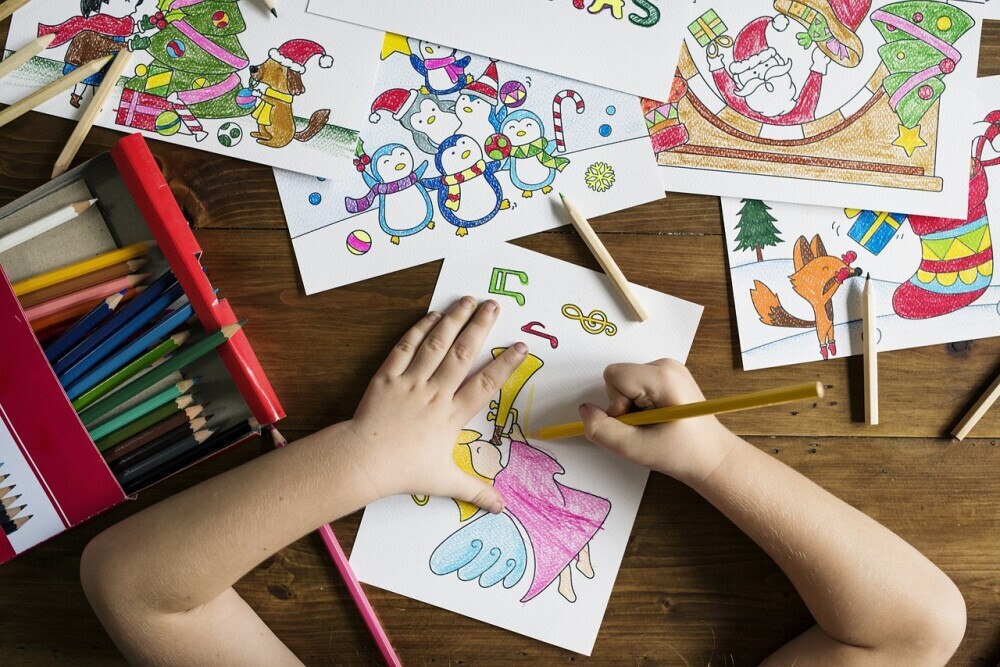
Let’s look at how to help special needs children through the use of creative arts.
For busy parents raising special needs children, arts activities often become one more place where daily life feels harder than it should. Children with learning disabilities can run into barriers to arts engagement at home and school, sensory overload, fine-motor frustration, unclear directions, or fear of “getting it wrong”, and adults may hesitate to offer art when it seems likely to end in tears or shutdowns.
Yet the benefits of arts participation are real: shared art experiences can strengthen communication, support emotional regulation, and build confidence in a way that feels safe and personal. With steady parental support in arts, creativity can become a calm, repeatable win.
How To Help Special Needs Children
Build a One-Folder Digital Art Keepsake in 10 Minutes
When arts time feels hard to start, preserving what your child already makes can be a gentle way to honor progress.
Snap a quick photo (or scan) each finished piece, then save it to a single folder on your phone or computer so you can find everything in one place later. When you’re ready, export a small set into one PDF collection for easy viewing and sharing with family. Saving artwork as PDFs keeps the pages together, displays consistently across devices, and is simple to revisit over time. If you want everything in one file, a tool to combine PDF documents can merge separate scans into a single keepsake.
Next, you can build on this momentum by matching art forms to how your child learns best.
Match 6 Art Forms to Your Child’s Learning Style
Small, consistent art moments often work better than big “projects.” Pick one art form that matches how your child learns best, keep the first session under 10 minutes, and save anything you make in the same digital keepsake folder you’ve already set up, progress is easier to notice when it’s documented.
- Painting with built-in supports (for learning disabilities): Set out three colors, one tool choice (brush or sponge), and a “start box” drawn on the paper so your child knows where to begin. Painting can reduce language demands and let kids show ideas through color, shape, and pattern, especially helpful when reading/writing is hard. Try “paint the feeling” prompts (calm lines, zigzags for energy), then snap a photo for your folder to track mood and attention changes over time.
- Music routines that borrow music therapy benefits: Use a predictable call-and-response pattern, clap a simple rhythm, have your child echo it, then take turns being the leader. Many families use music for regulation because rhythm and repetition can support attention, communication, and emotional expression; an art therapy definition highlights how the creative process can support therapeutic goals. Keep it low-pressure: two minutes of echo clapping, two minutes of humming, then a “finish song” so the ending is clear.
- Dance as a motor-skills builder (motor planning + coordination): Create a mini “movement menu” with 4 picture cards: step-tap, reach-high, march, freeze. Do three rounds of 20–30 seconds with a 10-second rest, using the same sequence for a week so motor planning has time to stick. If balance is tricky, dance beside a wall or chair for light support, and offer choices (“big steps or small steps?”) to keep participation voluntary.
- Theater games for social skills (without performance pressure): Start with two-person “emotion mirrors”: you make a face/body pose, your child copies, then switch roles. Theater builds turn-taking, flexible thinking, and perspective-taking because kids practice reading cues and responding in real time. For children who get stuck on exact scripts, use three choice cards (who/where/what) to create short, repeatable scenes (30–60 seconds) you can record and store alongside artwork for a growth timeline.
- Crafting for sensory integration with clear boundaries: Offer one texture at a time (paper strips, soft fabric squares, smooth stickers) and use a “try–pause–choose” rule: touch for 5 seconds, pause, then decide yes/no. This supports sensory integration by letting the nervous system sample input safely without overload. Keep cleanup predictable with a tray or placemat “workspace box,” and end with a quick photo of the finished craft for your keepsake folder.
- Sculpting to unlock creativity through hands-on problem-solving: Use soft clay or homemade dough and give a constraint-based challenge: “Make something that can stand up” or “Make a bowl that holds three coins.” Sculpting strengthens hand muscles and encourages flexible thinking because kids can change their plan midway, pinch, roll, flatten, and rebuild. Take a photo from two angles to capture 3D progress, then label it with one skill you noticed (“kept trying,” “used both hands,” “made a new idea”).
When you match the art form to your child’s learning style and keep sessions short and repeatable, you’ll see which activities support focus, regulation, and confidence, and movement-based arts become a natural, low-pressure way to build coordination and self-expression.
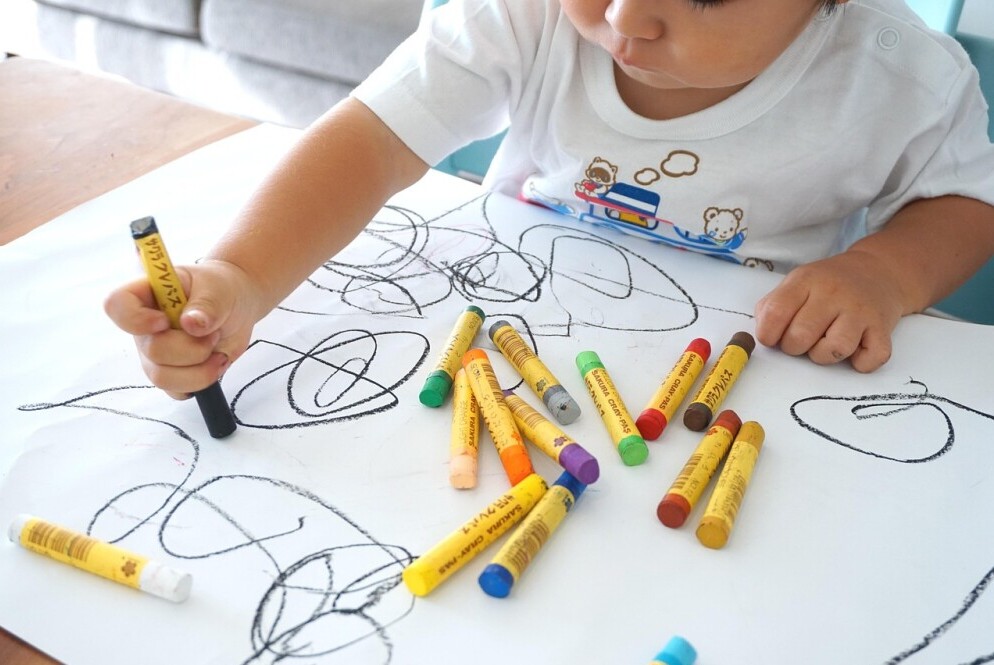
Use Adaptive Dance to Grow Coordination and Self-Expression
As you match art forms to how your child learns best, dancing can stand on its own as a powerful option. Adaptive dance invites kids to explore movement in ways that fit their bodies and senses, supporting coordination, body awareness, and self-expression without needing “perfect” steps. Next, we’ll cover what to do if your child resists or melts down.
Common Questions Parents Ask About Creative Arts
Q: What if my child melts down the moment art starts?
A: Treat it as a signal, not a failure. Offer a “warm-up” choice like squeezing putty, tearing paper, or 30 seconds of gentle rocking before starting. Keep the first task tiny, then pause and praise the attempt, not the result.
Q: How can I handle sensory sensitivities to paint, glue, or noise?
A: Swap in low-mess options such as paint sticks, water brushes, sticker collages, or digital drawing on a tablet. Try tools that increase comfort, like thicker grips, adaptive scissors, or gloves for tactile-avoidant kids. Let your child control exposure by using “one finger” or “one minute” rules.
Q: Can short attention spans still benefit from arts activities?
A: Yes, 3 to 5 minutes can be plenty when the activity is predictable and visual. Use a simple “first art, then choice” cue and set a timer your child can see. End while it is going well so confidence stays intact.
Q: Should I look for a program instead of doing this at home?
A: Both can work, and many families do a mix. Inclusive community classes and disability-focused nonprofits may offer adaptive tools and trained staff, and 2012 live performing arts event participation data highlights why access matters. Ask about sensory supports, smaller groups, and trial sessions.
Q: Why does my child quit when something looks “wrong”?
A: Perfectionism and anxiety are common, especially when tasks feel unpredictable. Use “mistake-friendly” materials like washable markers and collage, and model fixing, covering, or transforming “oops” marks. Display process photos to show progress over time.
Small steps add up, and your child’s creative voice is worth protecting.
Building Lasting Confidence Through Simple, Ongoing Art Practice
When a child has sensory sensitivities, short attention, or a shaky start with new tasks, creative time can feel like one more struggle to manage. A steadier approach is to keep art low-pressure and flexible, treating it as a routine for connection and expression rather than a performance to judge.
With that mindset, small moments of making become meaningful practice, supporting the developmental benefits of arts engagement, emotional growth through creativity, and the confidence that comes from being understood. Small, consistent art time builds skills, regulates feelings, and strengthens confidence over time.
Choose one easy art routine to repeat this week and note one small win to share. These repeated experiences can shape long-term outcomes of arts participation by growing resilience, communication, and a sense of belonging.
Please feel free to comment below if you have any other ideas on how to help special needs children.
















Hello Michel,
One thing I’ve learned through homeschooling my son is that the activity itself isn’t always what determines whether he’ll engage with it—the topic matters just as much. He’s a very active kid and actually seems to absorb information better when he can move around rather than being expected to sit still and listen. When we find a hands-on activity connected to something he’s genuinely interested in, though, he is all in!
That’s why I liked your emphasis on adapting creative activities to the individual child instead of focusing on doing something a particular way. I think it’s easy for adults to have an idea of what learning is supposed to look like, when one child might happily sit and create for an hour while another needs to move, explore, and come back to the project several times.
Giving children room to experience an activity in the way that works for them can be just as important as the activity itself.
Angela M 🙂