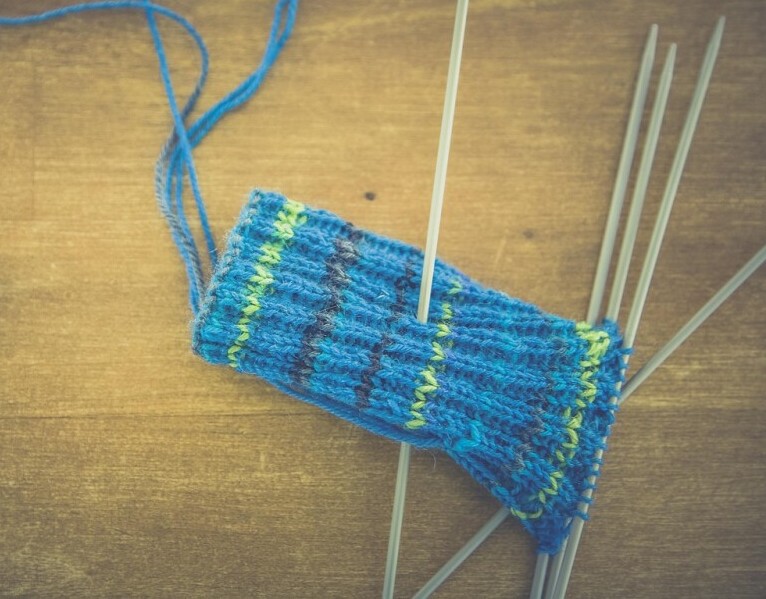
Let’s learn to knit socks. This one is especially for beginners.
Knitting a pair of socks on your own might sound a bit intimidating, but it’s actually a rewarding and fun way to create something that’s not only warm and comfy but also super personal. Just imagine sliding into your very own handmade socks on a chilly evening, feeling the cozy warmth known only with a homemade knit!
This article may contain affiliate links, which means that the owner of this website may get commissions on qualifying purchases, at no cost to the buyer.
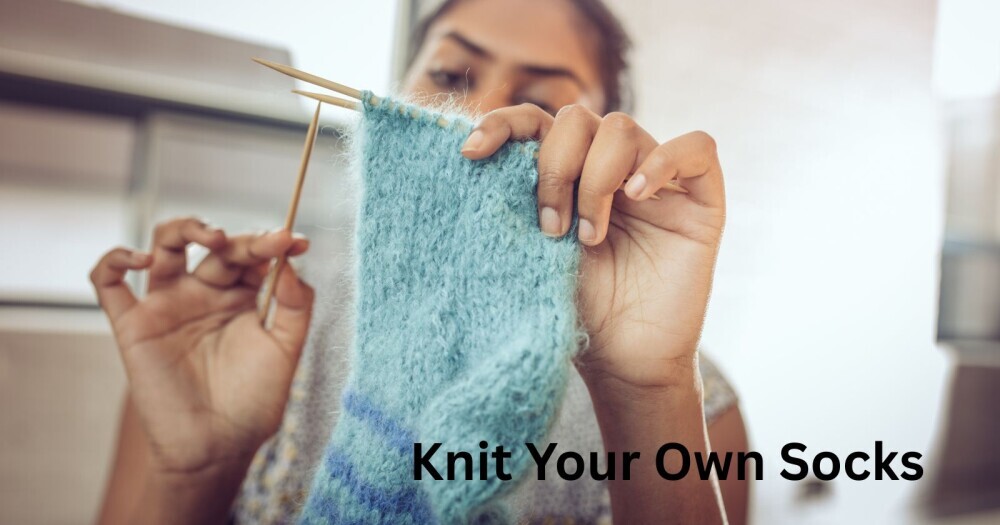 Learn To Knit Socks
Before you start creating your toe warmers, you need to gather the right materials.
First things first, you want to get yourself a good set of knitting needles. Beginners often find that circular needles are easy to handle when making socks. And then there’s the yarn – go for a sock-weight or fingering-weight yarn, which works perfectly for beginners. You might want that soft, fluffy goodness against your feet, so make sure it’s a yarn you love the feel of.
Understanding some basics will help lay a solid foundation. You’ll start with techniques like casting on, knitting, and purling – the bread and butter of any knitting project. There are a bunch of videos and written guides online that can walk you through these if you’re not familiar yet. For socks specifically, you’ll want to try and master the “knit in the round” technique on your needles, which is a nifty way to get those socks shaped right.
Picking the right yarn is a bit like picking a tasty ice cream flavor – you want something you love and that’s easy to work with. For your first pair, choose a yarn that matches the instructions on your pattern regarding the weight and yardage. Soft, machine-washable yarns are usually a hit with beginners since they’re simpler to care for and comfortable to wear.
Beginning this sock journey doesn’t have to be tough when you’re armed with the basics and a dash of patience. Once you get the feel of those needles click-clacking away, you’ll see progress pretty quickly, and that will keep you motivated to push on. Remember, every knitter was once a beginner too, so embrace the learning curve and have a blast!
Mastering Essential Techniques for Knitting Socks by Hand
Once you’re all set with your materials and you’ve got the basic techniques down, it’s time to get into the nitty-gritty of knitting a sock. It might seem complex with words like ‘heel flap’ and ‘gusset’ flying around, but breaking it down into steps makes it super manageable.
Begin with the cuff. It’s typically a stretchy ribbed pattern to snugly fit your leg. You’ll knit in the round, forming the tube shape that’s essential in sock-making. Circular needles or double-pointed needles can do the job, just use what feels comfy for you.
The leg part comes next, which can be as long or as short as you like. Beginners might start with a shorter leg to keep things simple. Stick with basic stitches for now – you’ll get to the snazzy stuff as you get more confident.
Now onto the heel, where things get interesting. This is where you turn the sock, and it’s a bit like magic. Basic techniques like the ‘short row’ or ‘heel flap and turn’ are your starting point. They create that lovely bendy bit that hugs your heel snugly.
Finished with the heel, it’s time to work down the foot. Here, you’ll continue knitting in the round until it’s about the length of your foot. Remember to periodically try it on or compare it to your foot to make sure the fit’s just right.
Finally, you’ll get to the toe. Much like the heel, the toe might seem tricky at first, but breaking it down makes it simpler. You’ll decrease stitches to shape it, and once it looks like it’s fit for a foot, you’ll bind it off neatly.
Mistakes? Don’t sweat them. Every dropped stitch or little hole is part of the learning. Just look up some basic fixes online, and soon you’ll be breezing past blunders with ease.
Transforming Beginners into Confident Sock Knitters
After tackling your initial pair, you might be itching to make your sock knitting even more efficient. As you get cozy with the process, you’ll find yourself picking up speed. Practicing your grip and working on consistent tension are key steps in becoming a faster knitter.
Once you’re confident with basic socks, don’t hesitate to explore more intricate patterns. Lace designs, cables, or colorwork can really add some flair. Taking on new patterns is like opening up a whole wardrobe of possibilities – each project teaches you new skills along the way.
Mistakes can still crop up when you learn to knit socks, and that’s a part of the journey. Maybe you’ve got a hole where there shouldn’t be one, or something feels too tight. Common fixes are usually just a Google search away, offering step-by-step guidance to solve these hiccups.
Engaging with the knitting community can boost both learning and joy. Online forums, YouTube channels, and local knitting groups provide a welcoming space to answer questions and share your creations. Connecting with fellow knitters often sparks inspiration and encouragement.
When you feel ready, branching out beyond socks is a natural next step. Try your hand at scarves, hats, or even larger projects like sweaters. Each new endeavor builds on the skills you’ve honed, transforming you from a beginner to a truly skilled knitter eager to show off your creations.
Please comment below if you feel you can add anything when it comes to learning to knit socks.
















This is such a fantastic beginner-friendly guide to knitting socks! I love how it breaks down the process step-by-step, making it feel totally doable for someone new to knitting. The emphasis on picking the right yarn and needles is so important—starting with soft, manageable yarn really makes a difference. Also, highlighting key techniques like knitting in the round and turning the heel demystifies what can seem like tricky parts. I appreciate the encouragement to embrace mistakes as part of learning—that mindset helps keep frustration at bay. Plus, the tip about engaging with the knitting community is gold; sharing progress and asking questions can really boost confidence. Overall, this post inspires me to finally try knitting socks myself. Can’t wait to get those needles clicking and create my own cozy, handmade socks!
Learning to knit socks as a beginner can feel intimidating at first, especially when tackling techniques like knitting in the round and shaping the heel, but breaking the process into manageable steps makes it much easier. Starting with circular needles and a soft, sock-weight yarn helped me gain control and comfort, while practising essential techniques like the heel flap and turn built my confidence. Frequent measuring and trying on the sock ensured a good fit, and embracing mistakes as part of the learning process kept frustration low. Engaging with online tutorials and knitting communities provided valuable support, making the journey enjoyable and rewarding. There’s nothing quite like wearing your handmade socks and knowing you created them from scratch!
You are quite right. It always feels great to wear your own knitted creations.
I’ve always admired people who can knit or crochet—seriously, it looks like magic to me! I never learned how to crochet (one day!), but knitting has always been on my radar. I loved how you broke everything down here—it makes sock knitting seem way more doable.
But I gotta ask… aren’t socks kind of next-level? I always thought scarves were the go-to beginner project. Would you say it just depends on the pattern, or are socks secretly a great place to start?
Yes JarieLyn, a scarf is definitely the easier route to go for your first project.
I’ve actually taught myself to knit socks over the past couple of years, so this brings back memories of all the excitement (and frustration!) that came with my first pair. I remember how intimidating the heel flap and gusset sounded—I must have watched the same tutorial video ten times before it finally clicked.
What helped me most was starting with a simple pattern and using a soft, machine-washable yarn that didn’t split easily. It made practicing much less stressful. I also learned that using stitch markers and writing down each step as I went kept me organized, especially when knitting in the round.
One thing I’d add: don’t be afraid to unravel mistakes. I used to feel like ripping back rows was a failure, but it’s just part of learning. By my third pair, I could tackle more decorative cuffs and play with colors.
If you’re just starting, be patient with yourself and celebrate every milestone—even if your first socks look a bit wonky. There’s nothing quite like slipping on something you made yourself, especially when you remember how far you’ve come.
Thank you for you very helpful advice Linda.
I’ve always dreamed of knitting cozy little socks for my kids—there’s just something so special about handmade things, especially when they’re made with love! I’ve tried a couple of times but honestly couldn’t master the art of “knitting in the round.”
Your post makes it feel a lot more doable though, and I appreciate how you broke down the process and explained it in such an encouraging way. Maybe it’s time I give it another shot—with simpler yarn and a little more patience this time.
Thanks for inspiring moms like me not to give up on learning!
Try again. It is very doable, especially on a loom. I do it when I watch television at night.
Michel, this beginner’s guide to sock knitting is both comforting and incredibly motivating. I love how you’ve demystified the process—breaking it into simple, confidence-building steps while encouraging readers to embrace the learning curve with patience and creativity. Your analogies (especially the ice cream yarn comparison!) make it all feel fun and accessible. And the way you highlight community resources adds a layer of support that many newcomers will really appreciate.
I’m curious—do you have a favorite yarn blend or brand that strikes the perfect balance between softness and durability for beginner sock knitters? Would love to hear your personal go-to!
Regards
Oren
I don’t, as each time I go and buy yarn, there is something new to try. For socks I love the soft and thicker yarns.