Knitting without the need for needles might sound like a contradiction, but that’s where the real magic begins. This method, which involves using nothing but your fingers or even your arms, adds a whole new dimension to the world of knitting. You might be on the subway or lounging at home, and your knitting project can truly come along for the ride.
Here’s a little transparency: Our website contains affiliate links. As an Amazon Associate, I earn from purchases. This means if you click and make a purchase, we may receive a small commission. Don’t worry, there’s no extra cost to you.
 Knitting Without Needles
So, what’s the big deal with finger and arm knitting? Well, knitting without traditional needles has a charm that’s hard to ignore.
Picture this: less equipment to carry and a more tactile connection to the yarn. There’s a sense of immediacy and control that you just don’t get with regular needles. It’s all about that hands-on experience.
Now, why do some folks swear by these alternative techniques? For starters, it’s super beginner-friendly. Those who find knitting with needles tricky will often find finger and arm knitting much easier to pick up. Less fuss and fewer technical skills needed, making it accessible to almost anyone! Plus, it’s fast. Way fast. You can whip up a cozy blanket or scarf in a fraction of the time, perfect if patience isn’t your strong suit.
Connecting personally with the craft is another huge benefit. Handling the yarn directly means you’re not just creating something with your hands—you’re really getting a feel for the material. This connection can be both calming and satisfying, a great way to relax and unplug from the digital world. And there’s something about seeing your end product, knowing it came from your own two hands, that’s pretty powerful.
Of course, like any craft, there are challenges too. The two biggest? Getting started and getting the tension right. It might feel a bit awkward at first, but trust me, with a bit of practice, it’ll become second nature. It’s about finding your rhythm and enjoying the process as much as the result.
Innovative Techniques for Arm and Finger Knitting
Mastering needle-free knitting might seem daunting at first, but it really boils down to a few simple moves. Let’s start with arm knitting—probably the quickest way to create chunky, gorgeous projects. All you need is some super bulky yarn and a bit of space to swing your, well, arms. The loops you’ll create are larger, which means you can finish pieces like cowls or throws in a jiffy.
As for finger knitting, it’s a perfect way to dip your toes into this creative world. Whether you’re a seasoned knitter looking for something new or a complete newbie, finger knitting offers a variety of projects from bracelets to intricate patterns. You only need your fingers and some yarn to get started, making it fun and portable!
When it comes to materials, you’re looking for yarns that are thick and chunky. These are easier to handle when using arms or fingers. Also, natural fibers like wool and cotton can be more forgiving when it comes to tension and flexibility. Don’t shy away from experimenting with different textures to see what suits your style!
Now, let’s talk challenges and solutions. Anyone can feel a bit tangled up starting out. Keeping your loops even by spreading your yarn properly across your arms or fingers is key. Take your time to practice getting your tension consistent, since this will make a huge difference in how professional your projects look.
The best advice? Just go for it! With these knitting methods, the process is often more enjoyable than focusing too strictly on the outcome. You’re gonna stumble a bit at first, but remember, each little hiccup is part of the fun learning process.
A Deep Dive Into ‘Knitting Without Needles’ by Anne Weil
Diving into Anne Weil’s ‘Knitting Without Needles,’ you’ll find an innovative guide that feels like a friendly chat with someone who gets you. This book takes you through the ins and outs of arm and finger knitting with the warmth and ease of a favorite sweater. From cozy blankets to stylish scarves, it’s a treasure trove of creative ideas and clear instructions.
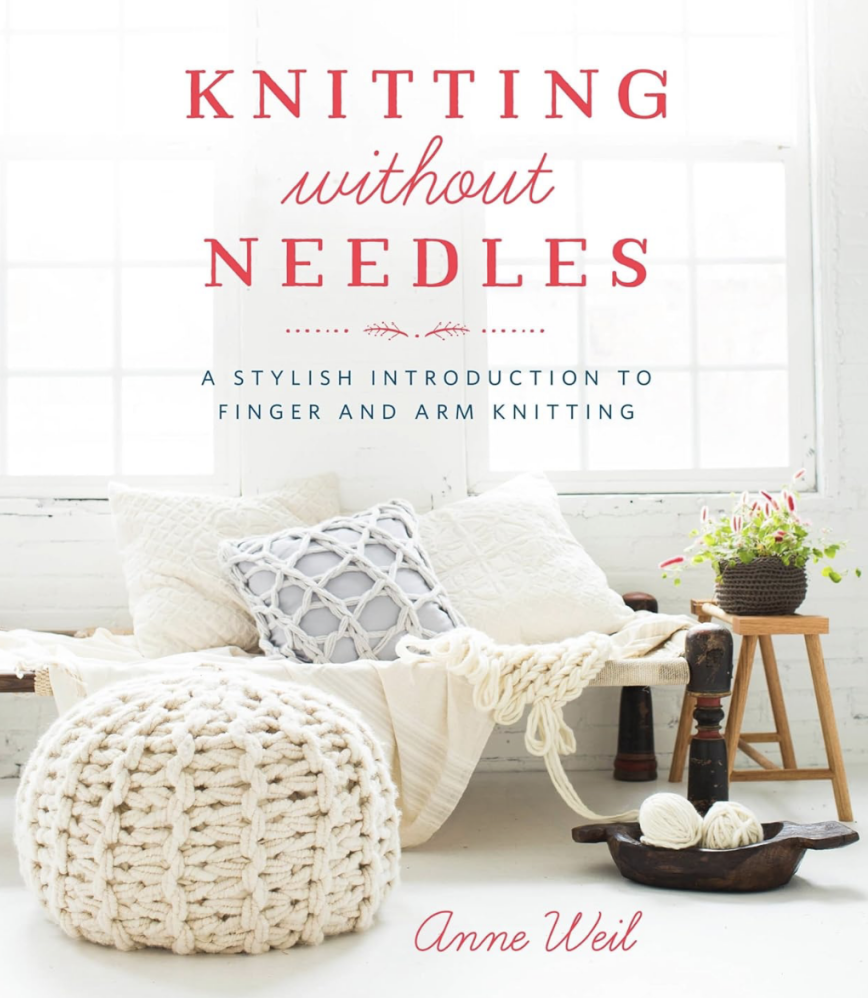
One of the coolest things about this book is how approachable it makes the process. Anne breaks down projects into simple steps, so you’re not left scratching your head. Even if you’ve never knitted a stitch before, you’ll find her guides encouraging and accessible. It’s clear she’s put a lot of heart into making sure you can jump in and start creating, no matter your experience level.
What’s particularly inspiring in Anne’s work is the range of projects showcased. There’s room to experiment with different sizes and textures, pushing your creativity without pushing you over the edge. Readers often praise her ability to inspire confidence, even tackling bigger projects that might seem intimidating at first.
Readers’ feedback on ‘Knitting Without Needles’ highlights the book’s joy and simplicity. Many have found that this approach to knitting opens up creative channels they didn’t know they had. It’s a reminder that crafting is about enjoyment and personal expression, not just the final product.
If you’re eager to start knitting without traditional tools, Anne’s book is a fantastic stepping-off point. It reshapes the way we think about crafting, encouraging us to embrace messiness and imperfection as part of the crafting joy. So why not grab some yarn and let your fingers or arms do the work? It’s about bonding with the process and discovering that creating something new can be purely delightful.
So what are you waiting for, try out knitting without needles and liberate yourself!
















Thanks for sharing an informative post
This article offers an engaging introduction to the creative world of knitting without needles, highlighting the accessibility and tactile appeal of finger and arm knitting. It emphasises the beginner-friendly nature of these techniques, their speed, and the personal connection they foster with the craft. Michel Maling also explores practical tips and common challenges, encouraging readers to embrace the imperfections of handmade work. The feature on Anne Weil’s book, Knitting Without Needles, adds depth by showing how structured guidance can inspire creativity. Overall, it’s a warm and motivating look at an innovative, hands-on approach to knitting.
Keep up the good work!
What a refreshing and inspiring read! I love how this article brings out the creativity and simplicity of knitting without needles. The idea of using just your fingers or arms to craft something cozy and beautiful is both empowering and exciting—especially for those of us who’ve struggled with traditional knitting techniques.
I also appreciate how approachable this method is. The way you described the tactile connection and the speed of projects really makes me want to dive in and try it myself. And Anne Weil’s book sounds like the perfect guide for beginners and seasoned crafters alike—it’s now on my must-read list!
Thanks for highlighting such a fun, hands-on way to unplug and create. I’m definitely inspired to grab some chunky yarn and let my fingers get to work!
Hi there –
Like any hobby, knitting encompasses a wide range of skill levels — from basic techniques without needles to more advanced work with them. With enough practice, I can see myself becoming skilled at arm knitting, too. Just like anything else, the more you practice, the better you get!
Keep those stitches going — happy knitting!
First of all, until I read your post here about Knitting without Needles, I just thought knitting had to be accomplished with knitting needles. Of course I know nothing about knitting, but this process of knitting without needles appears very appealing. Those who are interested in this technique should purchase the book to receive more instructions, know-how, and tips. This knitting technique seems to show satisfaction not only in the results, but probably more importantly in the process. Very interesting and unique article.
Best wishes,
Kent